Regenerative Farming in Ireland
An overview of regenerative farming principles and how they apply to Irish farming systems.
Regenerative farming is an approach to agriculture that focuses on rebuilding soil health, increasing biodiversity, and working with natural systems rather than against them. In Ireland, where grassland dominates and rainfall shapes every management decision, regenerative principles offer a framework for building more resilient farms.
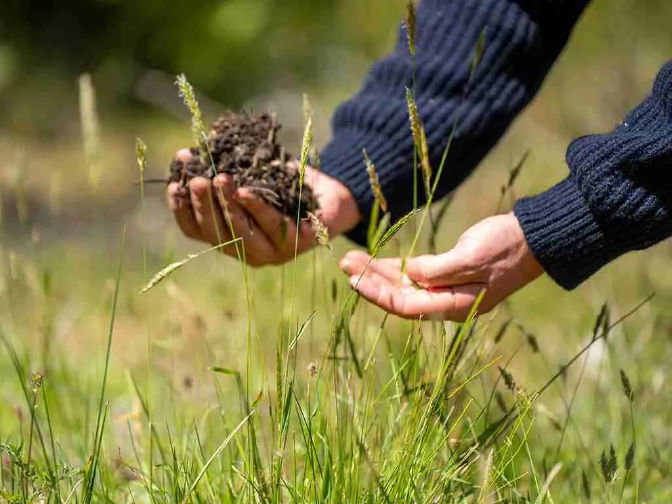
This guide outlines what regenerative farming means in practical terms, how it applies to Irish conditions, and what steps farmers can take to move in this direction. It’s not about following a rigid system - it’s about understanding principles and adapting them to your own land.
Regenerative farming is not new. Many of the practices it encompasses - rotational grazing, cover cropping, reducing tillage, integrating livestock - have been used by farmers for generations. What is relatively new is the framing: a deliberate focus on improving the land over time, rather than simply maintaining it or extracting from it.
Who this guide is for
This is for Irish farmers and landowners interested in understanding regenerative approaches, whether you are exploring the concept for the first time or looking to deepen existing practices. It’s also useful for agricultural advisors, students, and anyone involved in land management decisions.
What regenerative farming means
Regenerative farming is an approach that aims to improve the resources it uses, rather than deplete them. The central idea is that farming can actively rebuild soil, increase biodiversity, and strengthen natural cycles - not just slow their decline.
There is no single definition or certification that determines whether a farm is regenerative. Instead, the term describes a direction of travel: farming in ways that leave soil, water, and ecosystems in better condition than you found them.
In practice, regenerative farming tends to involve:
- Building soil organic matter and biological activity
- Minimising bare soil and soil disturbance
- Increasing plant and animal diversity
- Integrating livestock where appropriate
- Reducing reliance on external inputs over time
- Observing and adapting to local conditions
Regenerative farming is not anti-technology or anti-science. It draws on ecological understanding to make better use of natural processes, often reducing costs and risks in the long term. It does not mean abandoning productivity - it means pursuing productivity in ways that also strengthen the farm’s foundation.
Why regenerative approaches matter in Ireland
Ireland’s agricultural landscape has particular characteristics that make regenerative principles relevant.
Climate and soil vulnerability
High rainfall, mild temperatures, and long growing seasons create productive conditions, but they also put pressure on soils. Waterlogging, compaction, and nutrient leaching are persistent challenges. Regenerative practices that build soil structure and organic matter help land cope with these pressures.
Grassland systems
With roughly 80% of agricultural land under grass, Ireland’s farming is fundamentally tied to soil-plant-animal interactions. Regenerative grazing approaches - which manage livestock to benefit both pasture and soil - fit naturally within this context.
Tillage and erosion risk
Tillage land in Ireland faces erosion risk, organic matter decline, and structural degradation. Regenerative tillage practices - reduced cultivation, diverse rotations, cover cropping - address these issues directly.
Changing expectations
There is growing interest from consumers, food businesses, and policymakers in how food is produced. Farmers who can demonstrate they are actively improving their land may find this increasingly relevant to market access and public perception. This is separate from any formal schemes - it reflects a broader shift in how farming is viewed.
Long-term viability
Farming on degraded soil becomes progressively harder and more expensive. Regenerative approaches aim to reverse this trajectory - building a foundation that supports productivity for decades, not just the next season.
Core principles of regenerative farming
Regenerative farming is built on a set of interconnected principles. These are not rules to follow rigidly, but guidelines that shape decision-making.
Minimise soil disturbance
Every time soil is disturbed - through tillage, compaction, or overgrazing - its structure is damaged and biological communities are disrupted. Regenerative approaches seek to reduce disturbance wherever practical.
In tillage systems, this might mean adopting minimum tillage or direct drilling. In grassland, it means managing traffic, avoiding poaching, and maintaining ground cover. The goal is to let soil biology do the work of building and maintaining structure.
Keep the soil covered
Bare soil is vulnerable. It loses moisture, heats up, erodes, and loses organic matter. Regenerative systems aim to keep living plants or residue covering the soil as much as possible.
In grassland, this means maintaining sward density and avoiding overgrazing. In tillage, it means using cover crops, catch crops, or retaining stubble between cash crops. Ground cover protects soil and feeds the biology beneath it.
Maintain living roots
Living roots feed soil organisms through the sugars and compounds they release. A soil with active root systems supports more biology, cycles more nutrients, and builds more organic matter than a soil left fallow.
Perennial pastures naturally maintain living roots year-round. In tillage systems, cover crops and diverse rotations help extend the period of active root growth. The longer roots are active, the more the soil benefits.
Increase diversity
Monocultures - whether in crops or pastures - support less biological diversity above and below ground. Regenerative systems seek to increase diversity: different plant species, varied rooting depths, a mix of livestock where appropriate.
Diversity builds resilience. It reduces pest and disease pressure, supports a wider range of soil organisms, and spreads risk across the farming system.
Integrate livestock
Livestock have a role in regenerative systems beyond meat or milk production. Grazing animals cycle nutrients, stimulate plant growth, and - when managed well - can improve pasture and soil condition.
The key is management. Poorly managed grazing degrades land. Well-managed grazing, particularly rotational or adaptive approaches, can accelerate soil building and pasture productivity.
Common misconceptions and pitfalls
Regenerative farming attracts interest, but also confusion. Some common misunderstandings are worth addressing.
Not a return to old methods
Regenerative farming uses modern understanding of soil biology and ecology. While some practices echo traditional approaches, the framework is informed by science. It is not about rejecting progress - it is about directing it more thoughtfully.
Not just about carbon
Soil carbon is important, and regenerative practices often increase it. But focusing only on carbon misses the broader picture: soil structure, water cycling, biodiversity, and nutrient availability all matter. Carbon is one indicator among many.
It does not mean zero inputs
Regenerative farming aims to reduce dependence on external inputs over time, not eliminate them immediately. Fertilisers, lime, and other inputs may still be needed, especially during transition periods. The goal is to build soil function so that less is required, not to stop inputs regardless of consequences.
Results take time
Soil does not change overnight. Improvements in organic matter, structure, and biology accumulate over years, not seasons. Farmers expecting quick results may be disappointed. Patience and consistent management are essential.
Context matters
What works on one farm may not work on another. Soil type, climate, enterprise mix, and financial situation all influence what is practical. Regenerative principles are guidelines, not prescriptions. Adaptation to local conditions is part of the approach.
Practical management principles
Regenerative farming is applied differently depending on the system. Here are some considerations for grassland and tillage contexts in Ireland.
For grassland systems
Manage grazing to benefit soil and sward. Rotational or adaptive grazing - moving livestock frequently and allowing adequate rest periods - can improve pasture productivity and soil condition. The aim is to avoid both overgrazing and undergrazing.
Maintain ground cover. Avoid grazing swards too short, especially in wet conditions. Residual leaf area supports faster recovery and protects soil from compaction and erosion.
Increase sward diversity. Consider including clover, plantain, chicory, or other species in reseeds. Diverse swards have varied rooting depths, support more soil biology, and often prove more resilient to drought and disease.
Reduce compaction. Limit machinery and livestock traffic on wet ground. Use back-fencing, sacrifice paddocks, or housing to protect vulnerable areas during high-risk periods.
Integrate soil observation. Dig holes regularly. Look at root depth, aggregate structure, earthworm activity, and drainage. These observations guide management decisions better than assumptions.
For tillage systems
Reduce cultivation intensity. Where soil and weed conditions allow, consider minimum tillage or direct drilling. Fewer passes preserve structure and biology.
Use cover crops. Establish cover between cash crops to keep soil covered and roots active. Choose species suited to your rotation and timing - brassicas, cereals, legumes, or mixes.
Diversify rotations. Break up cereal-heavy rotations with different crop types. Legumes fix nitrogen and support different soil organisms. Root crops and brassicas offer different rooting patterns.
Retain and incorporate residues. Straw and crop residues feed soil biology. Where possible, chop and incorporate rather than burn or remove.
Monitor soil condition. Use a spade to check structure, compaction layers, and rooting depth. Soil tests provide data on pH, nutrients, and organic matter trends. Together, observation and data inform decisions.
Relationship to soil health
Regenerative farming and soil health are closely connected. In many ways, regenerative farming is the practice of building soil health through deliberate management choices.
Healthy soil - with good structure, active biology, adequate organic matter, and balanced nutrients - is the foundation that regenerative systems aim to create and maintain. The principles of regenerative farming are largely principles for supporting soil function.
This relationship works both ways. Improving soil health makes regenerative practices more effective. As soil biology becomes more active and structure improves, the system becomes more self-sustaining and less dependent on external inputs.
Understanding your current soil condition is an important starting point. Soil testing provides baseline data on pH, nutrients, and organic matter - see our guide to interpreting soil test results. Regular observation - digging holes, watching drainage, noting plant performance - adds context that numbers alone cannot provide.
Frequently asked questions
Is regenerative farming the same as organic farming?
No. Organic farming is defined by certification standards that restrict certain inputs and practices. Regenerative farming is a set of principles focused on outcomes - improving soil, biodiversity, and ecosystem function. A farm can be regenerative without being organic, and vice versa. Some farms pursue both.
Will regenerative practices reduce my output?
Transition periods may involve some adjustment, but the long-term aim is to maintain or improve productivity on a stronger foundation. Many farmers report that as soil health improves, input costs decrease and resilience increases. Results vary depending on starting conditions and how practices are implemented.
How long before I see results?
Some changes - like improved water infiltration after reducing compaction - can be noticeable within a season. Others - like meaningful increases in organic matter - take years. Expect gradual, cumulative improvement rather than sudden transformation.
Do I need to change everything at once?
No. Most farmers adopt regenerative practices incrementally, testing what works on their land before scaling up. Starting with one field, one practice, or one change to grazing management is a reasonable approach. Learning and adaptation are part of the process.
Is this just a trend?
The language is relatively new, but the underlying practices have long histories. Interest in regenerative approaches reflects growing awareness of soil degradation and climate challenges. Whether the term persists matters less than whether the principles prove useful on your farm.
Can tillage farms be regenerative?
Yes. Tillage systems face different challenges than grassland, but regenerative principles apply. Reducing cultivation, using cover crops, diversifying rotations, and building organic matter are all relevant to arable farming. Integration with livestock, where practical, can add further benefits.
Where do I start?
Start by observing your soil. Dig holes in different fields and compare what you see. Consider a soil test to establish a baseline. Identify one or two practices that fit your system - perhaps adjusting grazing management, trialling a cover crop, or reducing a tillage pass. Learn from the results and build from there.
Where to go from here
Regenerative farming is a direction, not a destination. The principles outlined here provide a framework for thinking about how you manage your land - but the specifics depend on your soil, your climate, your enterprise, and your circumstances.
The most important step is to start paying closer attention to your soil. Observation and curiosity are the foundation of regenerative management. From there, small changes - tested, evaluated, and adapted - accumulate into meaningful improvement over time.
If you want to understand your current soil condition, consider getting a soil test from Teagasc or an accredited laboratory. A clear baseline helps you set priorities, track progress, and make informed decisions about where to focus your efforts.